what is taste
haziq
a working definition
Taste is the skill of picking what's good when no rule tells you how.
When a rule is enough, you don't need taste, you need execution. A recipe says 250g of flour and you weigh it out. The linter catches your syntax error. The interview rubric scores eight out of ten.
You use taste where the rule runs out:
Picture the space of answers you could give. Most of it is bad. The good answers occupy a smaller region inside. Inside that, smaller still, sit the answers a rule can reach.
quality as elevation. the dashed loop is the rule-reachable region. the highest peak sits outside it.
Craft is what you have inside the rule region. You learn the rules well enough to vary them. You move from one good rule-reachable answer to a better one. That's most of skill development.
Taste is what gets you to the good answers outside the rule region.
same machinery, different output
- Cooking. The recipe gives you ratios. The chef tastes the sauce, adds a half-pinch more salt, decides it's done. The recipe didn't say when.
- Code review. Tests pass, the linter passes. The reviewer writes "this abstraction is wrong" and can't put that in a checklist.
- Hiring. Both candidates passed the structured interview. You pick one. The rubric didn't decide for you.
- Writing. Grammar fine, spelling fine, the paragraph sits there. You cut two sentences and it works.
but it doesn't transfer
That makes it sound like taste is one transferable skill. It isn't.
Take a venture investor with strong taste for companies. They read founder traits, business durability, distribution moats. Hand them a half-built product and they can't tell you what to ship next. A product designer with strong taste reads a different set: friction, intent, what users will pull on. They can pick the right thing to ship. Ask them which startup to back and they have nothing to offer. An engineer with strong taste for code reads a third set: complexity, coupling, what will be painful to change later. They can pick the abstraction that will hold up. Ask them what people want and they have no special insight.
Chase and Simon (1973) showed why. They scrambled a chess board into illegal positions and grand masters lost their memory advantage. What they remembered was the game, not the picture. Ericsson and colleagues (1993) found the same pattern across many domains: deliberate practice builds skill on the task you practiced, not on adjacent ones.
Some skill does carry over, but not far. A designer can judge a poster, a book cover, a film frame. These are next-door problems where the same eye works. Ask that designer which startup to back: nothing carries. The closer two fields look and feel, the more taste moves between them. The further apart, the less. Goldstone (1998) puts a name on the mechanism: perceptual learning tunes you to what you trained on, not to anything else.
So what is universal? Not the taste. The moves. You notice differences. You build a sense of what good looks like here. You choose. Those three moves work in any field. The taste you build with them is wired to where you trained it.
One caveat. Most of this research is visual. The framework comes from studies of paintings, faces, photographs, landscapes. That's where the predictions are sharpest. For sound, for ideas, for problems, for businesses, the same moves seem to hold, but the evidence is thinner.
the three traditions
Three traditions have argued about what taste is. Kant first, Bourdieu second, the psychologists third.
Kant: judgment with universal pretension
Kant's Critique of the Power of Judgment (Kant, 1790) treats taste as a faculty that judges the beautiful. The judgment is subjective. You feel it before you reason about it. It's also disinterested. You don't want to own the thing, just look at it. And it claims universal validity. When you call something beautiful, you expect everyone else to call it that too. Kant spent the third Critique defending that combination.
Preference and judgment work differently. A preference doesn't claim universal agreement. Say "I like vanilla" and nobody else has to agree. A taste judgment does claim it. Say "this scene needs strings, not piano" and you expect everyone paying attention to agree. The expectation of agreement is what makes it a judgment.
Bourdieu: taste as a social marker
Pierre Bourdieu's Distinction (Bourdieu, 1984) treats taste as a social marker. Your taste signals your class. The mechanism is habitus, a way of seeing you absorbed in childhood. It shapes what you notice and what you judge before you start to think about it.
People from different class backgrounds like different things. You can't see where your taste came from. What feels like personal preference is class calibration.
Cultural capital comes in three forms (Bourdieu, 1986). The embodied kind is how you carry yourself, what feels obvious, what feels embarrassing. The objectified kind is the books, the instruments, the art on your wall. The institutionalised kind is the degree. Embodied capital takes the longest because no one can give it to you. You absorb it.
The original Bourdieu has aged unevenly. He framed high-status taste as exclusive, with snobbery as the signal. Peterson & Kern (1996) showed the signal flipped. Liking a bit of everything, high and low, now does what snobbery used to do.
Empirical aesthetics: the cognitive machinery
Psychology has spent thirty years measuring what taste does. Three findings matter most.
First, the verdict and the feeling are separate. Leder et al. (2004) drew the line. Leder & Nadal (2014) tightened it a decade later. The verdict is what you say about the work ("this is excellent"). The feeling is what the work does to you (pleasure, being moved, indifference). The two can come apart. A film can be badly made and still a great time. A masterpiece can leave you cold. A single rating can't capture both.
judgment → ↓ emotion | bad | excellent |
|---|---|---|
| felt something | trashy fun The pleasure outruns the verdict. Fast & Furious, slasher horror, the pop song you keep replaying. | the rare overlap Verdict and feeling agree. Most films at the top of "greatest of all time" lists. The book you finished and then bought for everyone. |
| felt nothing | forgettable Bad and dull. The unmemorable middle of every algorithm feed; the seventh sequel. | masterful, leaves you cold The canonical dissociation. You respect it; you don't reach for it. Soulless fine-dining. The Best Picture winner everyone calls important and nobody re-watches. |
the four quadrants of taste · after Leder & Nadal (2014)
Second, liking tracks ease of processing. Reber et al. (2004) showed that when something is easy to take in, that ease registers as pleasure. You feel the thing is good. The pleasure was in the processing. The same mechanism explains the mere-exposure effect. Repeated exposure to almost anything raises your liking for it. It's one of the most replicated findings in psychology (Zajonc, 1968; Bornstein, 1989; Montoya et al., 2017).
The effect rises, then falls. A few exposures do nothing. Sustained exposure builds liking. Past the peak, boredom takes over.
Now picture this at scale. Anyone can make work that follows the rules, so it's everywhere. Liking peaks fast, then drops. Work that breaks the rules is rare. Its peak holds longer. Then someone copies it, the rules expand to include it, and a new peak forms further out.
the rule region drifts toward yesterday's taste. taste re-forms further out.
Yesterday's leap is today's rule.
Third, some preferences travel across cultures. Brown (2018) and Palmer, Schloss & Sammartino (2013, in the Annual Review of Psychology) catalogue a small cluster that replicates wherever it's been tested. Symmetric faces (Rhodes, 2006, meta-analysis). Composite faces (averages of many real faces) preferred over the individuals inside them (Langlois et al., 2000, meta-analysis). Curves over sharp angles, detectable at 84-millisecond presentations through amygdala threat-detection (Bar & Neta, 2006). Mid-range visual complexity, the kind you see in tree branches and coastlines but not in solid colours or pure noise (Spehar et al., 2003). Park-like landscapes over forests or deserts (Kaplan & Kaplan, 1989).
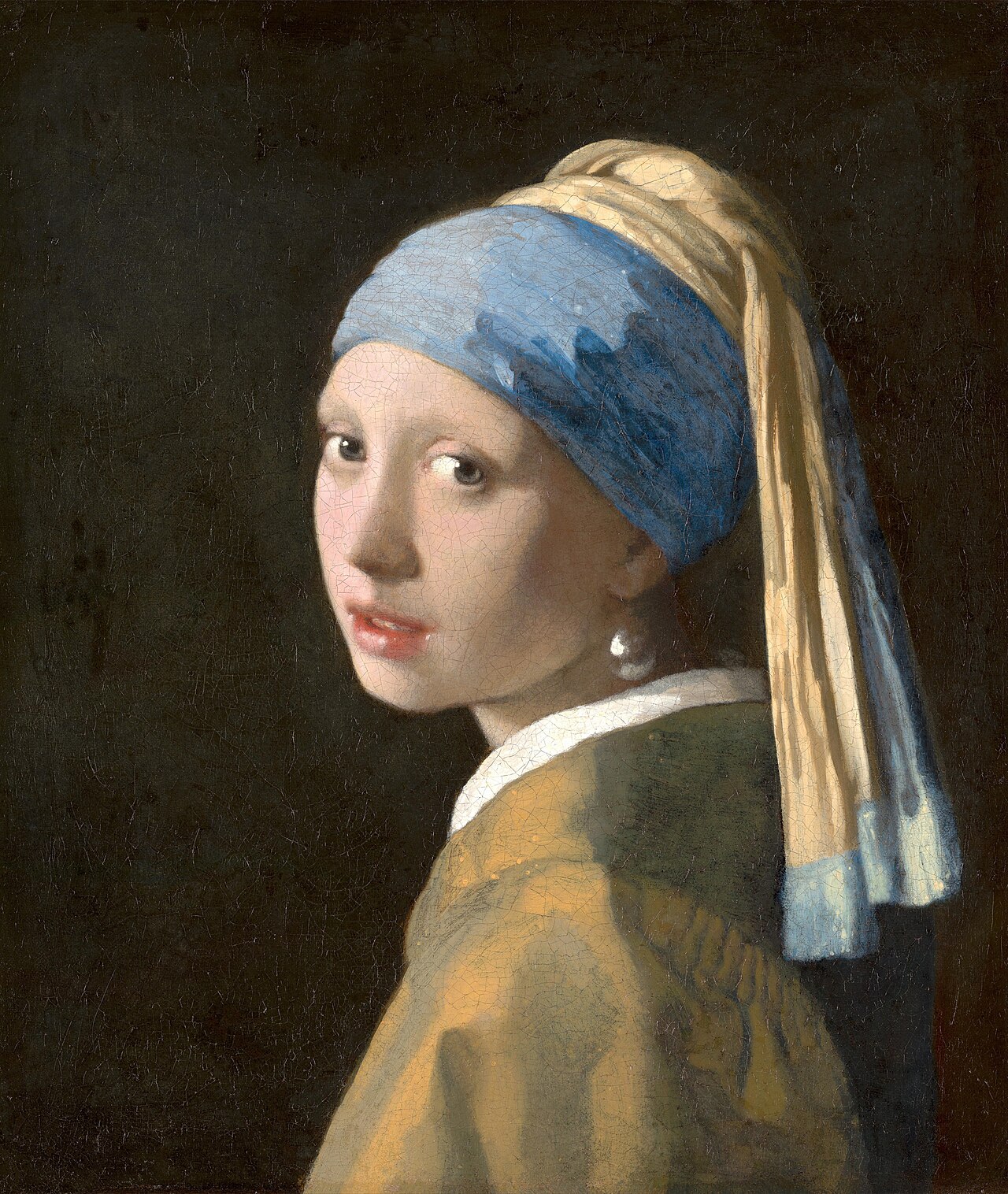

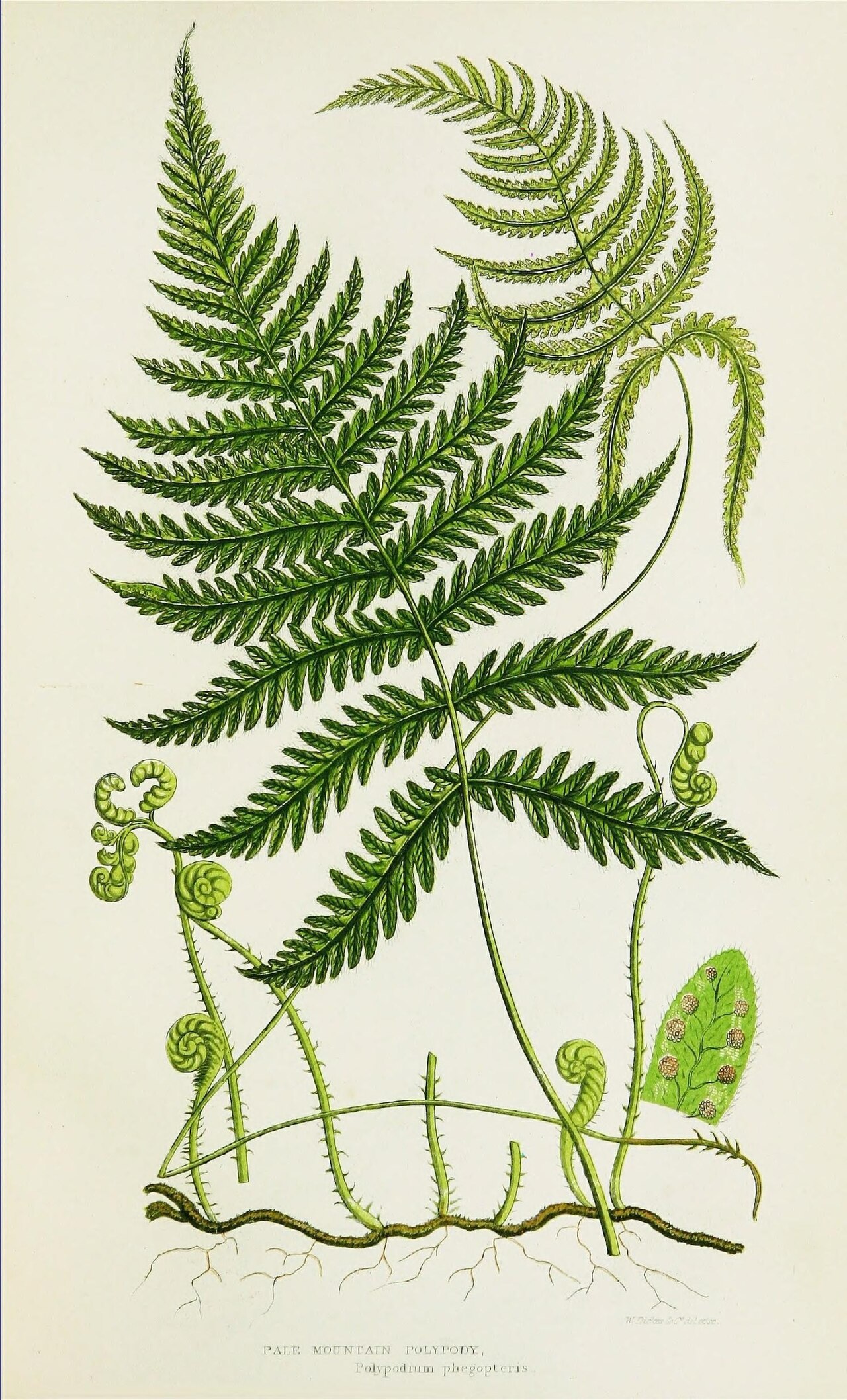
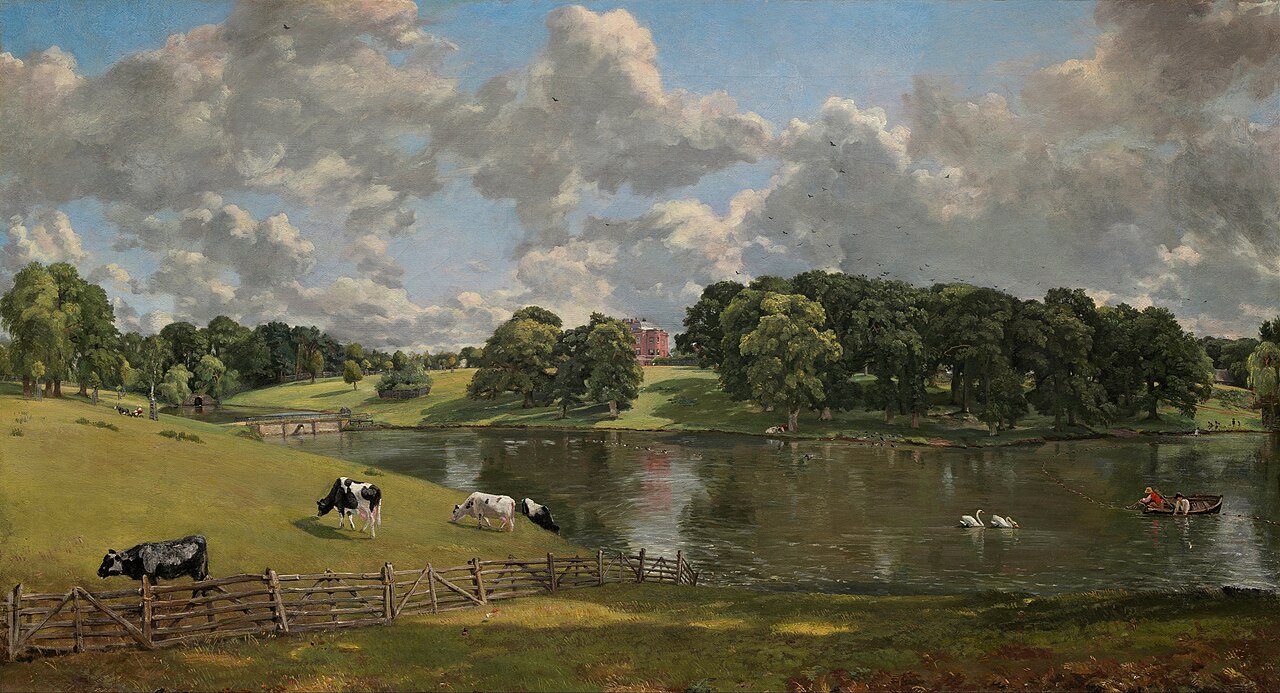
four cross-cultural universals · per Brown 2018 review · all works public domain
Others don't replicate. McDermott et al. (2016) tested the Tsimane' of the Bolivian Amazon on the consonance-over-dissonance preference. The Tsimane' rate consonant and dissonant chords as equally pleasant. The golden ratio fails modern replications. Many colour preferences are culture-shaped.
What you end up with is a small set of inborn preferences, with cultural and personal layers on top.
What each tradition gets right
Kant explains what taste claims to do. It judges, while expecting others to agree. Bourdieu explains what taste does socially. It marks position. Psychology explains the machinery underneath. The schemas in your head, what feels easy, what's cross-cultural, what you learned on top. None of them is the whole answer.
what's underneath
To develop taste, three pieces matter.
| piece | job | failure mode |
|---|---|---|
| perception | noticing differences others miss | "these look the same to me" |
| standards | a model of what good means here | "this looks off; I can't say what good would look like" |
| judgment | choosing under uncertainty | "everything looks equivalent until I have more data" |
The three pieces map onto the empirical work. Perception is what expertise builds. Chase & Simon (1973) showed it in chess masters, and the same chunking happens in wine tasters, code reviewers, editors. Standards are schemas. They're internal models of "good", structured enough to apply to new cases (Bartlett, 1932). Judgment is what Leder calls the verdict. It's the moment you pick, with the criteria not fully settled (Leder et al., 2004).
You need all three, and any two without the third leaves a hole. Without judgment, you get a sommelier who names twenty faults in a glass and freezes when you ask which one to drink. Without perception, you get a senior designer with opinions on everyone else's work who can't see when their own slide is doing too much. Without standards, you get a PM who defaults to the safer option every time.
Strong taste develops all three at once. That's rare, which is why the people who have it are people you can name, not roles.
why it matters now
Grinding the pigment. Operating the press. Getting on the radio. Catching the algorithm. For most of history the scarce skill was producing the thing. Taste sat downstream, a luxury for when the making was done.
| 1500–1800 early modern | Materials | Pigments, paper, marble. The thing itself was hard to come by. |
| 1800–1950 industrial | Means of production | Printing presses, factories, recording equipment. Reproduction was the bottleneck. |
| 1950–2000 broadcast | Distribution | Shelf space, airtime, channels. Getting a copy in front of someone. |
| 2000–2020 platform | Attention | Distribution opened up; eyeballs became the constraint. |
| 2020+ generative | Selection | Generation approaches free. Which of the twenty plausible outputs do you ship? That's taste. |
what was scarce, by era · hover to highlight
Generation is no longer the bottleneck. AI can generate more than you can, faster than you can. Good work is becoming a long series of good selections.
references
- Bar, M., & Neta, M. (2006). Humans prefer curved visual objects. Psychological Science, 17(8), 645–648. doi
- Bartlett, F. C. (1932). Remembering: A Study in Experimental and Social Psychology. Cambridge University Press. archive
- Bornstein, R. F. (1989). Exposure and affect: Overview and meta-analysis of research, 1968–1987. Psychological Bulletin, 106(2), 265–289. doi
- Bourdieu, P. (1984). Distinction: A Social Critique of the Judgement of Taste (R. Nice, Trans.). Harvard University Press.
- Bourdieu, P. (1986). The forms of capital. In J. G. Richardson (Ed.), Handbook of Theory and Research for the Sociology of Education (pp. 241–258). Greenwood.
- Brown, S. (2018). Toward a unification of the arts. Frontiers in Psychology, 9, 1938. doi
- Chase, W. G., & Simon, H. A. (1973). Perception in chess. Cognitive Psychology, 4(1), 55–81. doi
- Ericsson, K. A., Krampe, R. T., & Tesch-Römer, C. (1993). The role of deliberate practice in the acquisition of expert performance. Psychological Review, 100(3), 363–406. doi
- Goldstone, R. L. (1998). Perceptual learning. Annual Review of Psychology, 49, 585–612. doi
- Kant, I. (1790). Critique of the Power of Judgment (P. Guyer & E. Matthews, Trans., 2000). Cambridge University Press.
- Kaplan, R., & Kaplan, S. (1989). The Experience of Nature: A Psychological Perspective. Cambridge University Press.
- Langlois, J. H., Kalakanis, L., Rubenstein, A. J., Larson, A., Hallam, M., & Smoot, M. (2000). Maxims or myths of beauty? A meta-analytic and theoretical review. Psychological Bulletin, 126(3), 390–423. doi
- Leder, H., Belke, B., Oeberst, A., & Augustin, D. (2004). A model of aesthetic appreciation and aesthetic judgments. British Journal of Psychology, 95(4), 489–508. doi
- Leder, H., & Nadal, M. (2014). Ten years of a model of aesthetic appreciation and aesthetic judgments. British Journal of Psychology, 105(4), 443–464. doi
- McDermott, J. H., Schultz, A. F., Undurraga, E. A., & Godoy, R. A. (2016). Indifference to dissonance in native Amazonians reveals cultural variation in music perception. Nature, 535(7613), 547–550. doi
- Montoya, R. M., Horton, R. S., Vevea, J. L., Citkowicz, M., & Lauber, E. A. (2017). A re-examination of the mere exposure effect: The influence of repeated exposure on recognition, familiarity, and liking. Psychological Bulletin, 143(5), 459–498. doi
- Palmer, S. E., Schloss, K. B., & Sammartino, J. (2013). Visual aesthetics and human preference. Annual Review of Psychology, 64, 77–107. doi
- Peterson, R. A., & Kern, R. M. (1996). Changing highbrow taste: From snob to omnivore. American Sociological Review, 61(5), 900–907. doi
- Reber, R., Schwarz, N., & Winkielman, P. (2004). Processing fluency and aesthetic pleasure: Is beauty in the perceiver's processing experience? Personality and Social Psychology Review, 8(4), 364–382. doi
- Rhodes, G. (2006). The evolutionary psychology of facial beauty. Annual Review of Psychology, 57, 199–226. doi
- Spehar, B., Clifford, C. W. G., Newell, B. R., & Taylor, R. P. (2003). Universal aesthetic of fractals. Computers & Graphics, 27(5), 813–820. doi
- Zajonc, R. B. (1968). Attitudinal effects of mere exposure. Journal of Personality and Social Psychology, 9(2, Pt. 2), 1–27. doi
comments
loading…Sign in to leave a comment. Your email is only used to identify you — no spam.